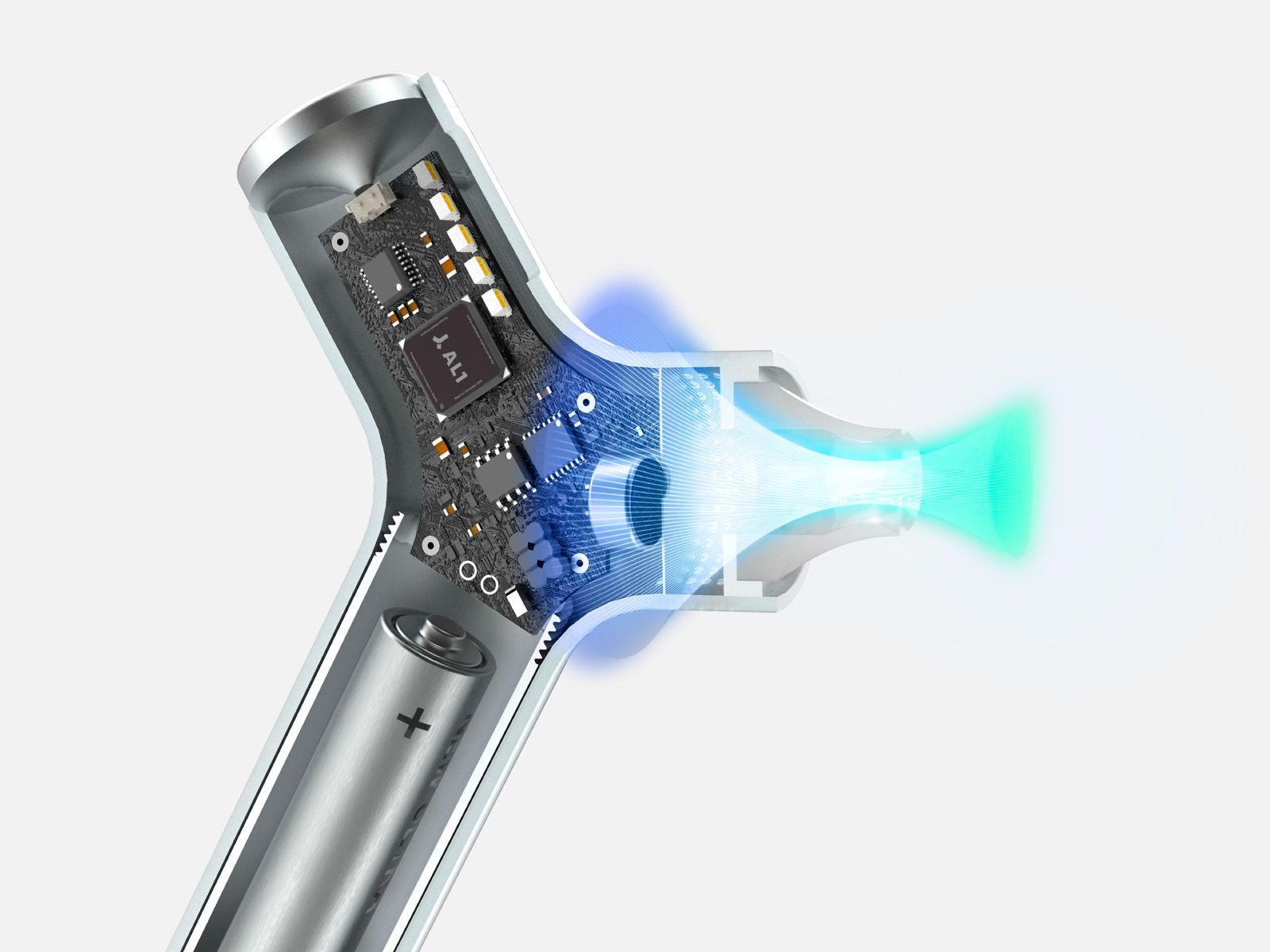
AeroLyze started with a question about emerging technologies: where could breath analysis do something a finger-prick glucometer can't? This is how the project went from that question to a device that fits in your hand. You can see the finished project at AeroLyze.
Designing for diabetes
Testing blood glucose today means carrying a pouch of lancets, strips and a meter, and pricking a finger every time. For prediabetics trying to stay active, that routine gets in the way. Acetone in the breath falls as blood glucose rises, which opened up a way to test without any blood at all.
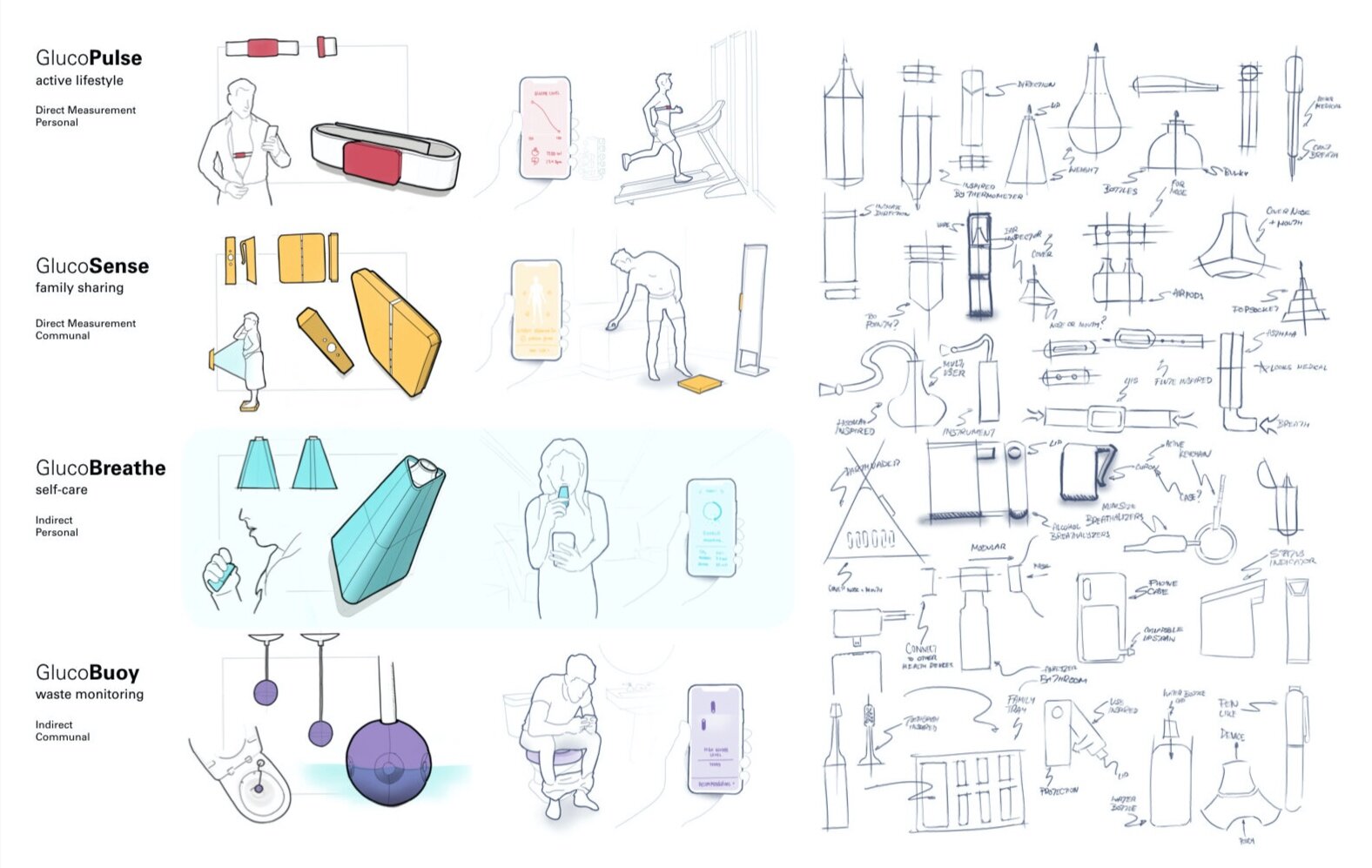
Ideation
I explored a wide range of directions for how breath sensing could fit into everyday life before narrowing down to a single handheld device.
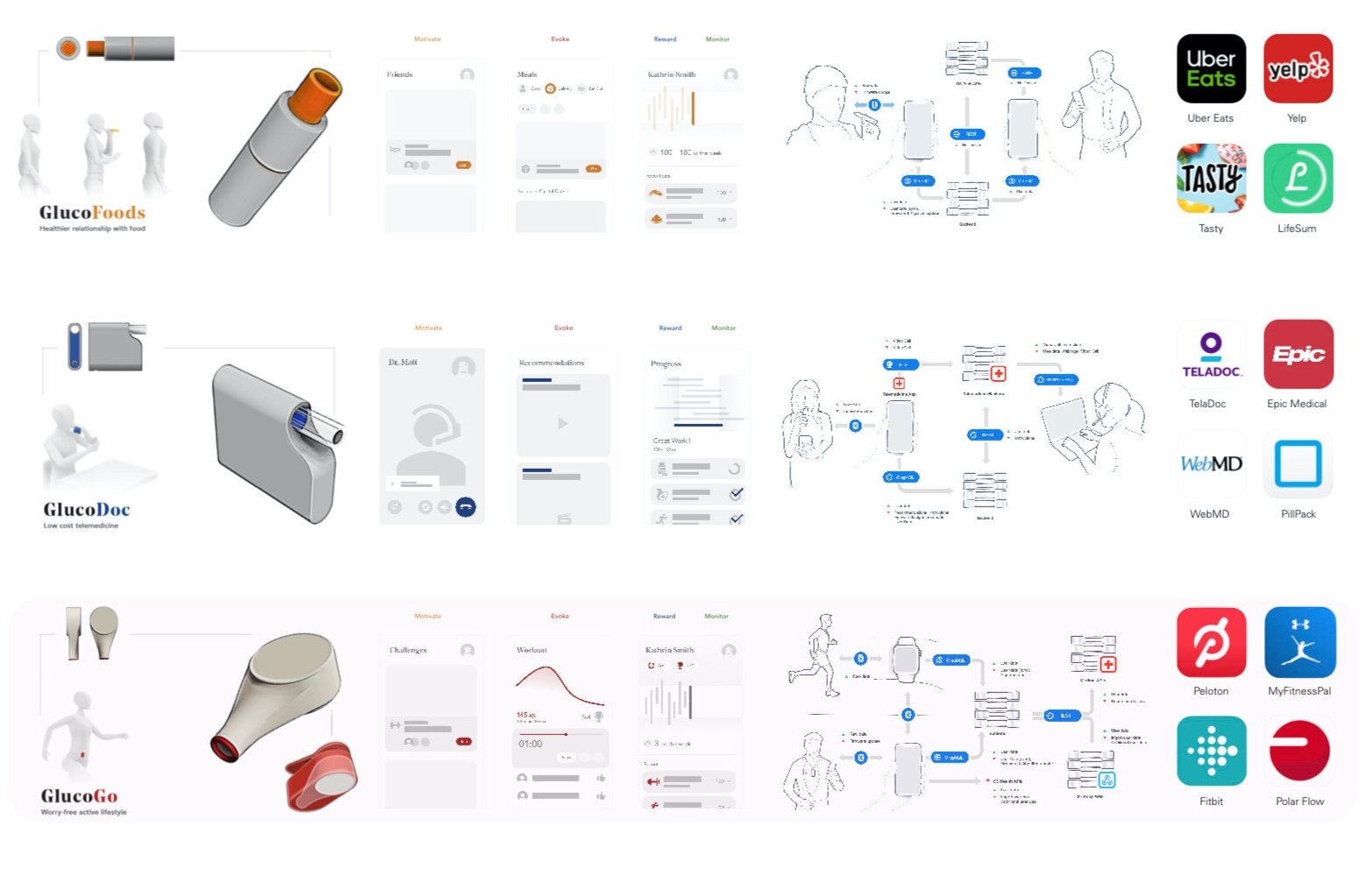
Experience and system design
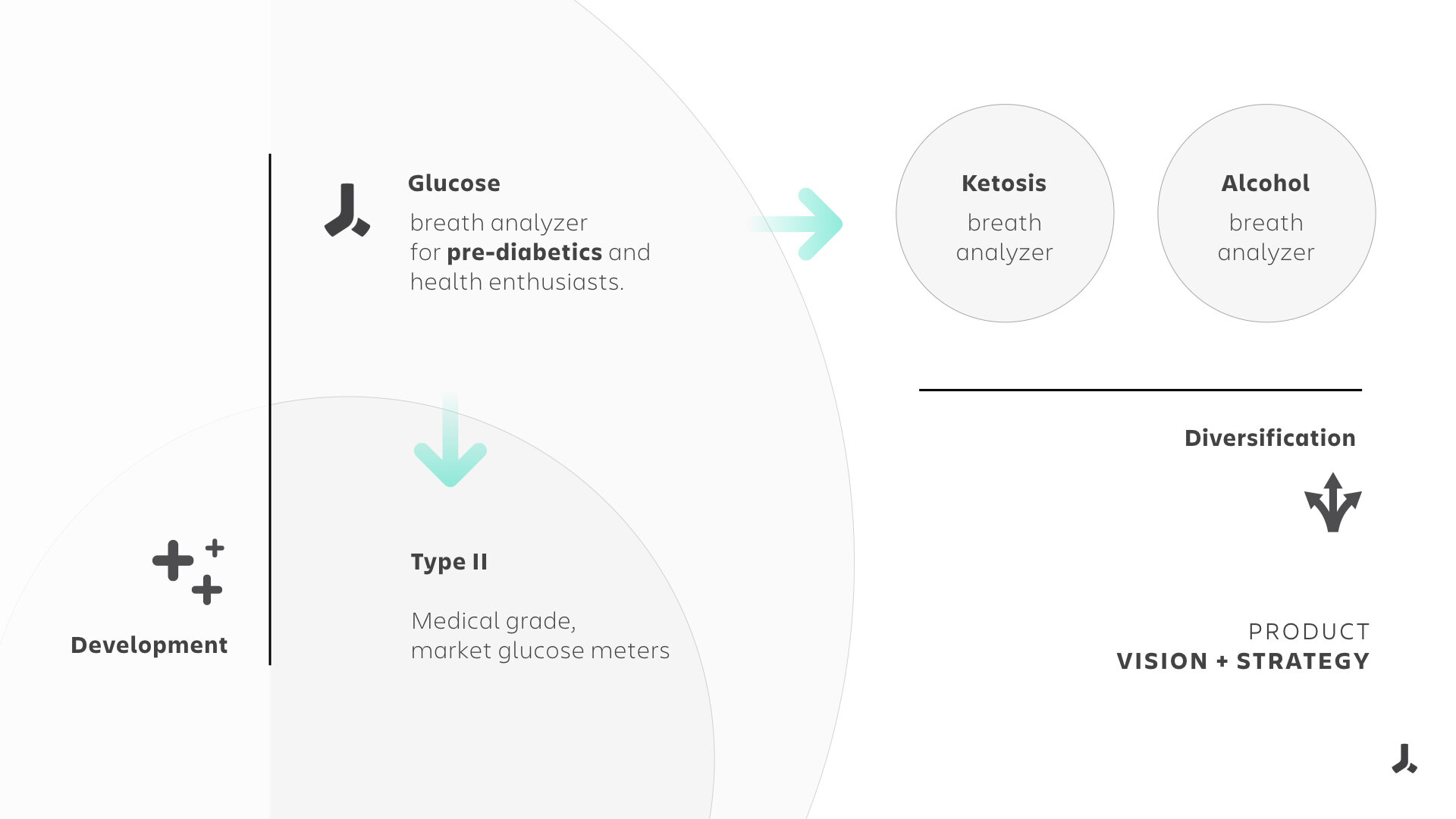
The goal was to set diabetics up for success. The device takes the reading, and acetone analysis paired with machine learning turns it into a glucose level and flags dangerous trends. That way a test can happen during a friend's dinner or in the middle of a run.
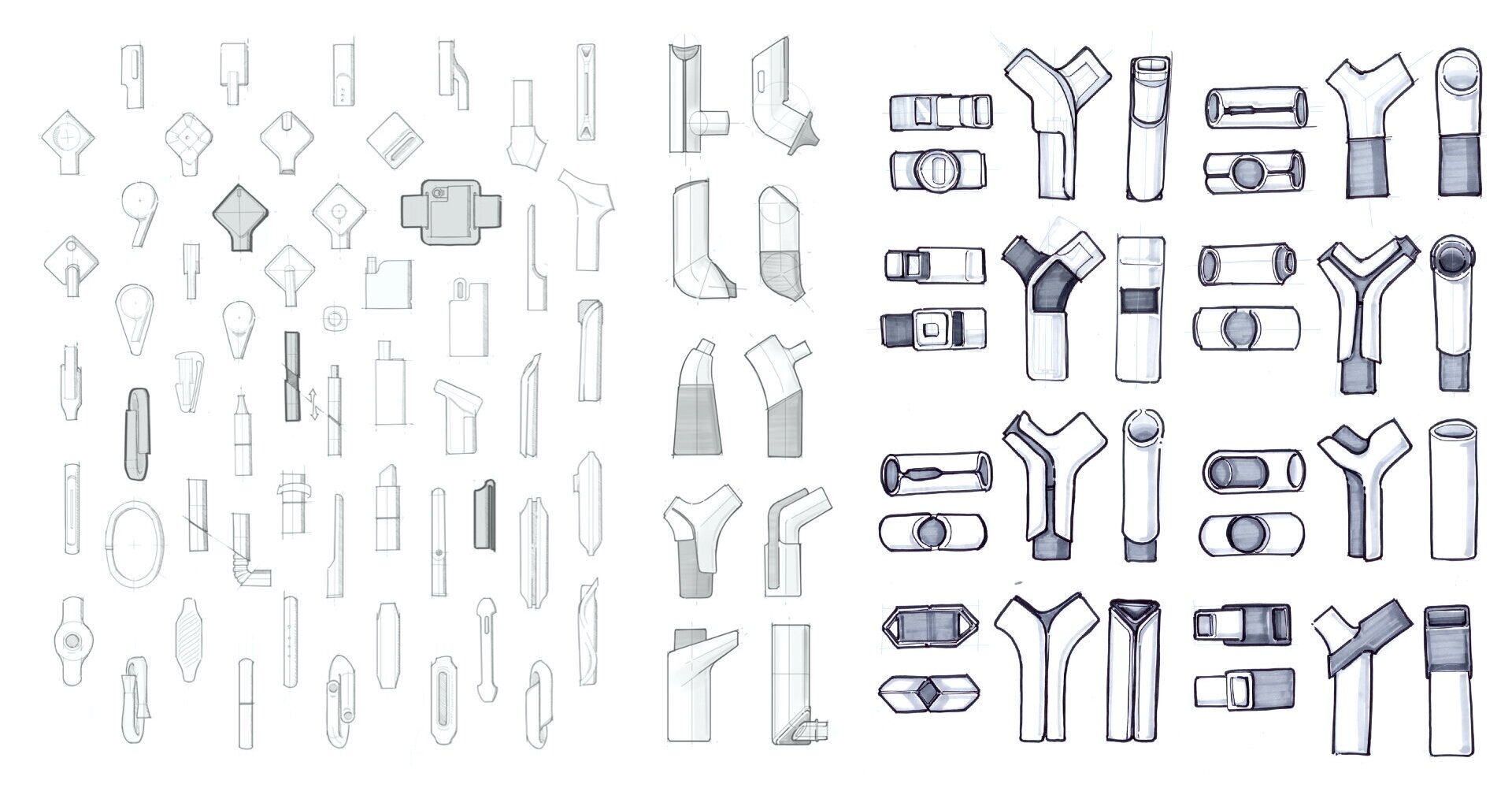
Form ideation
Anything you breathe into risks looking like a vape pen or a nebulizer. The early sketches searched for a form that read as neither.
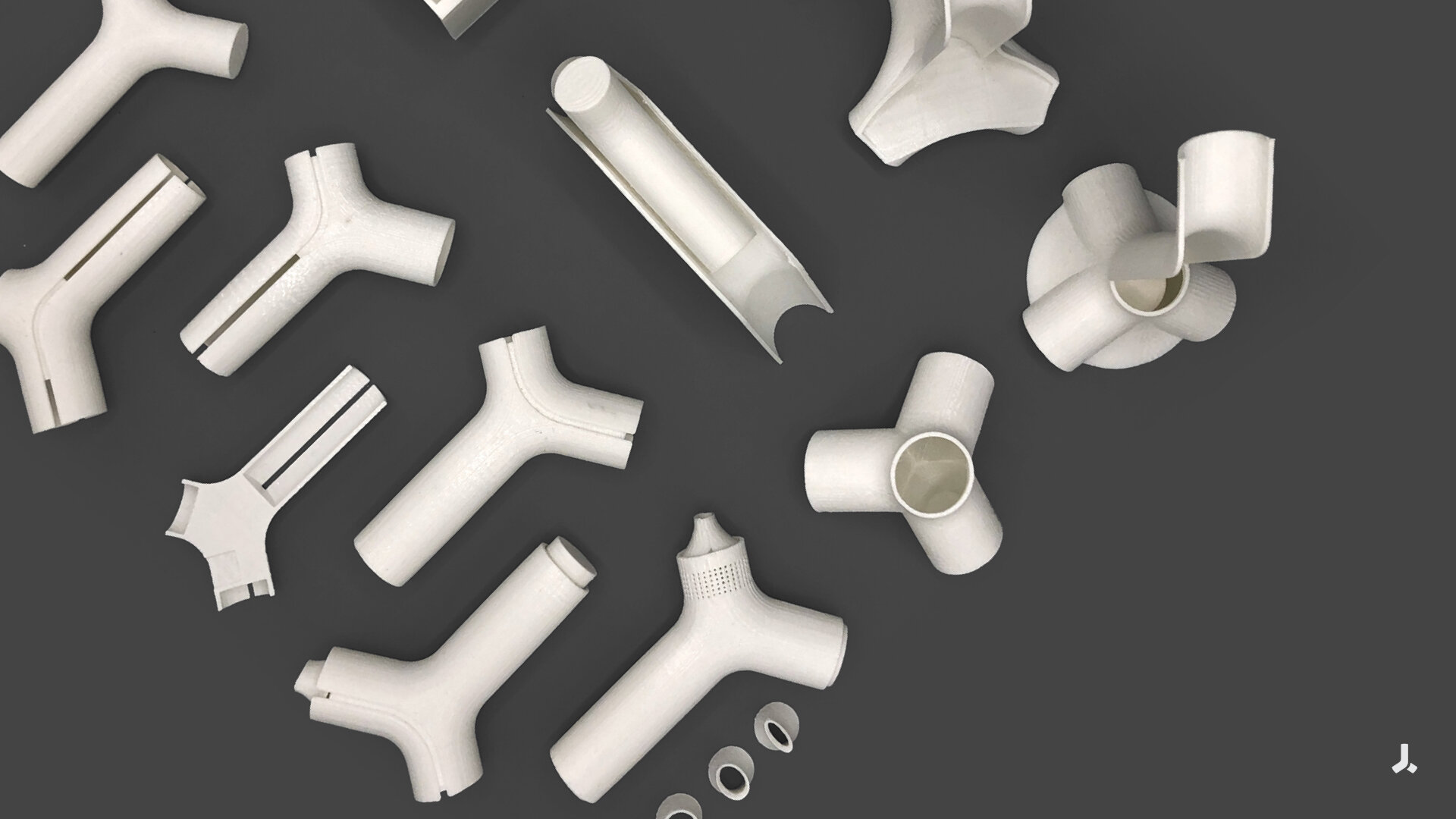
Form iteration
Each round refined the ergonomics, semantics and airflow: how the device sits in the hand, how clearly it shows where to breathe, and how air moves through it to the sensor.

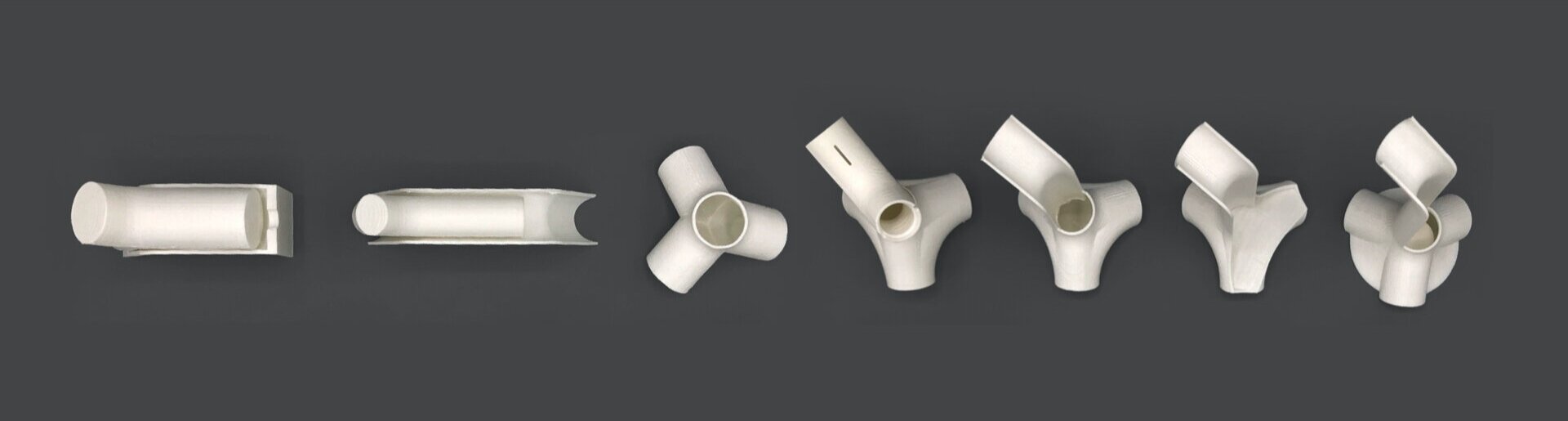
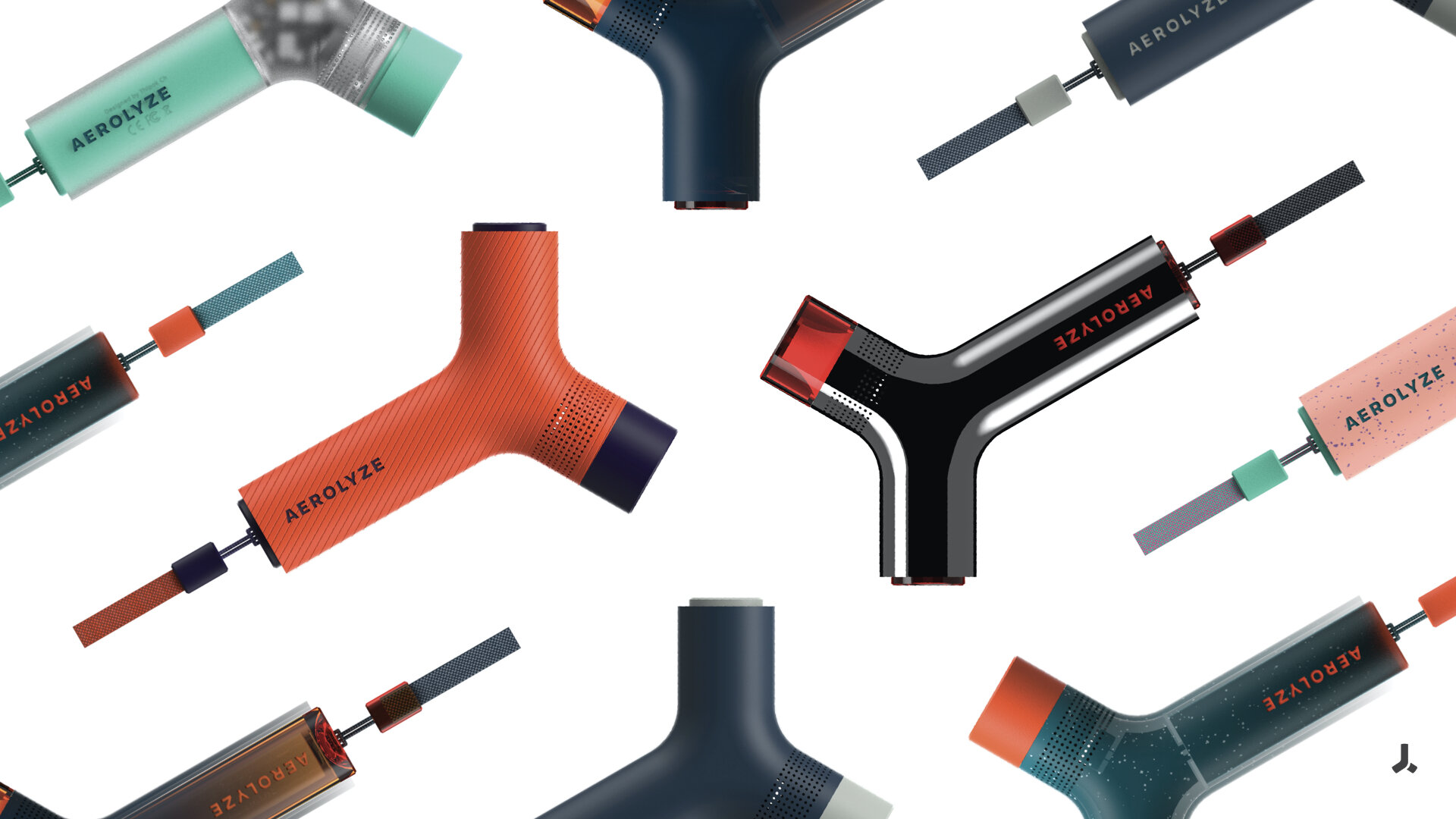
Color, materials and finishes
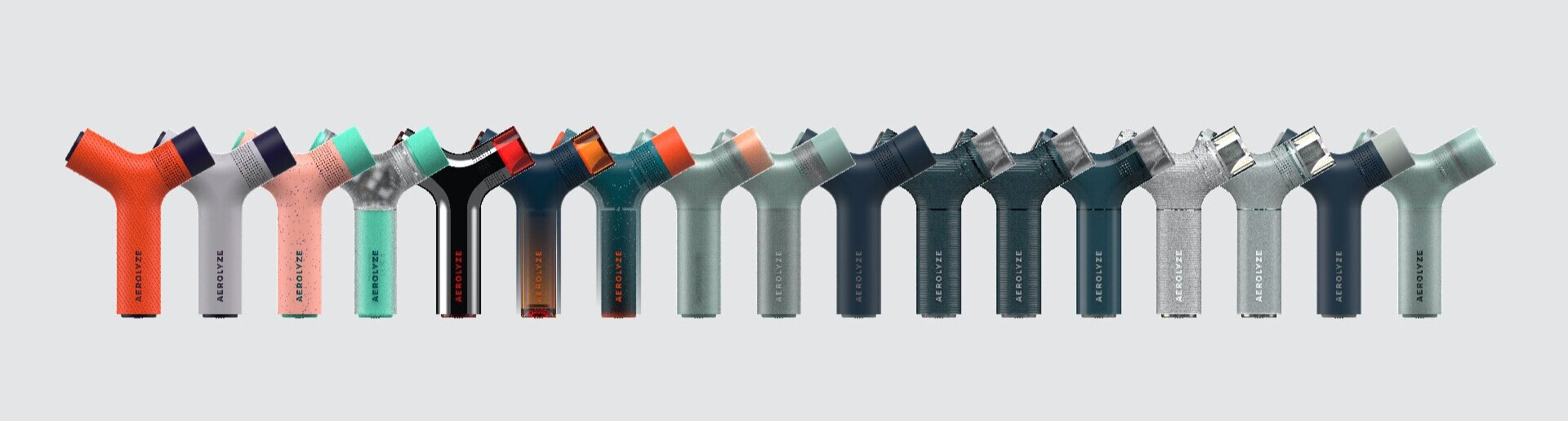
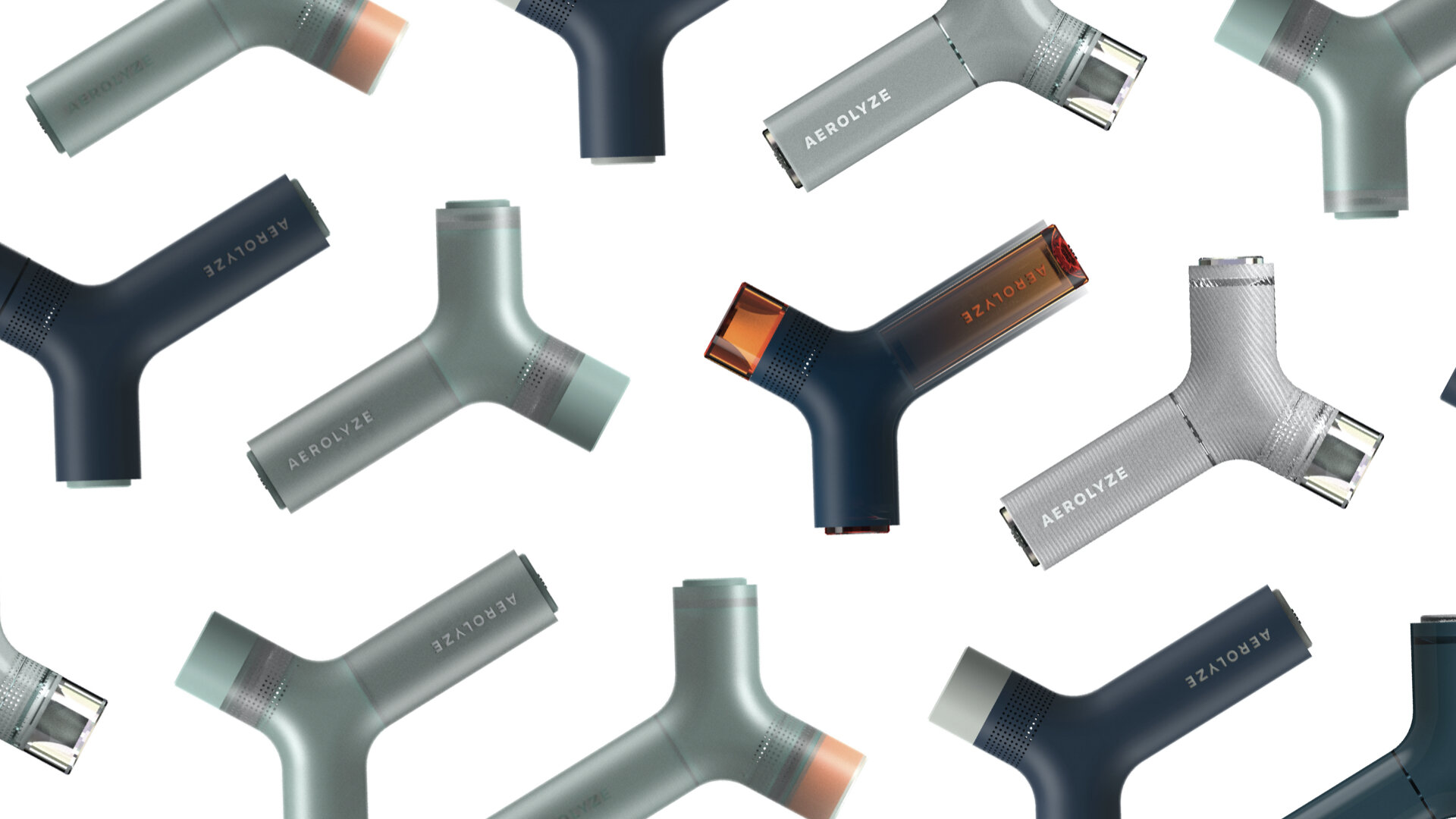
The finish had to balance a lifestyle aesthetic with a medical one. AeroLyze needed to be trusted like a medical device but carried like something personal.